
At a Glance
Typical Timeline
4–6 months for most puppies with consistent routine.
Key Tool
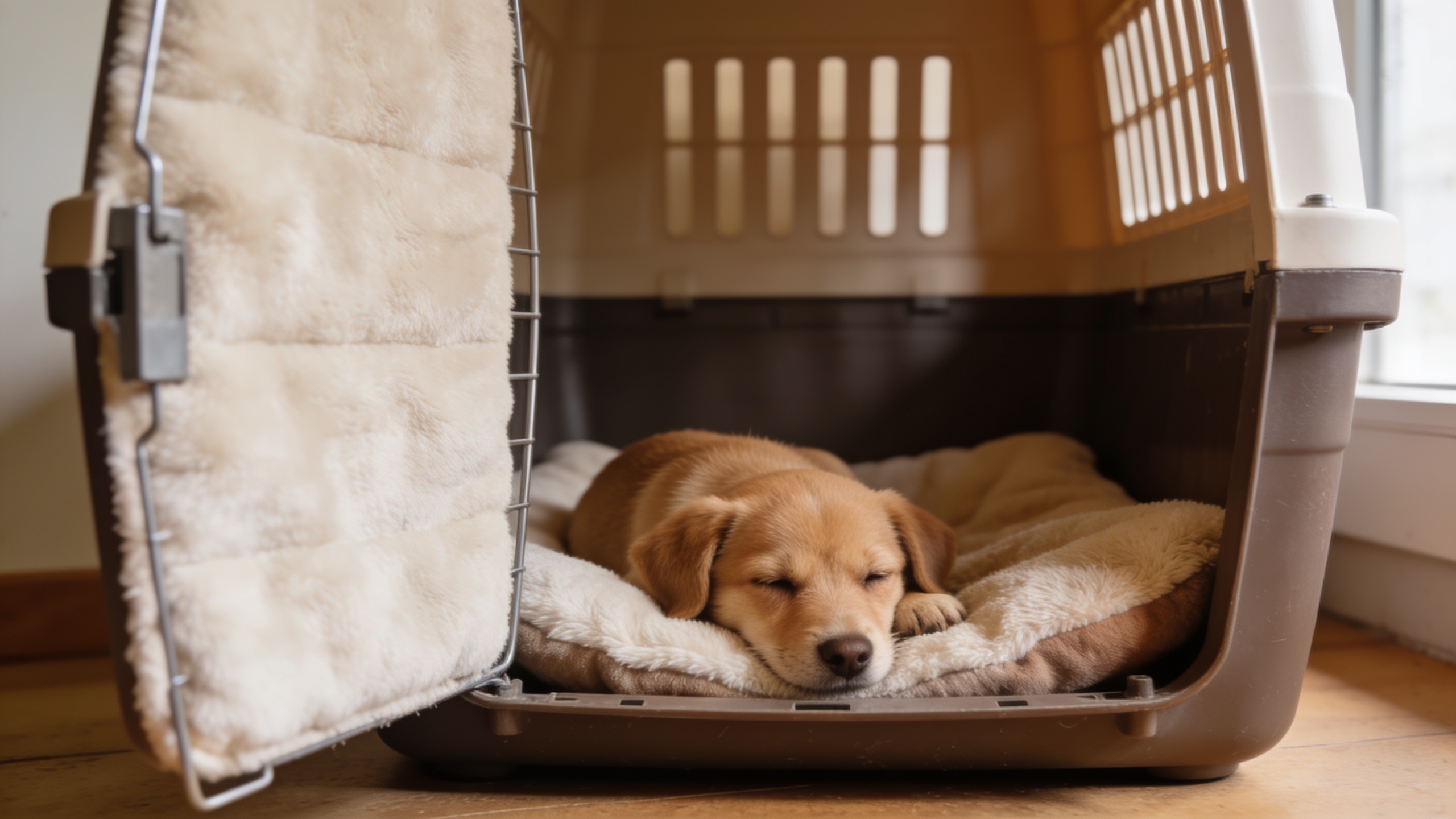
A properly sized crate, used as a den, not a punishment.
Common Mistake
Giving too much freedom before the puppy is ready for it.
Did You Know?
A crate that’s too large defeats its own purpose — a puppy will use one end as a bathroom if there’s room to keep the sleeping area clean.
House training is really crate training, schedule discipline, and clear communication working together — no single method replaces consistent supervision in the early weeks.
The Crate as a Tool, Not a Cage
Dogs instinctively avoid soiling their own den, so a properly sized crate — just big enough to stand, turn, and lie down in — naturally discourages accidents when a puppy can’t be watched directly.
Supervision Beats Correction
Watching a puppy closely and interrupting a squat before it happens, then rushing outside, teaches far faster than any correction after the fact ever could.
Expanding Freedom Gradually
As accidents become rare, a puppy earns access to more of the house a room at a time, rather than being given free rein all at once — a setback in one room doesn’t need to undo progress everywhere else.
Related Reading
Dog Gifts




Copyright © 2005–2026 Dog Pound. All rights reserved.