
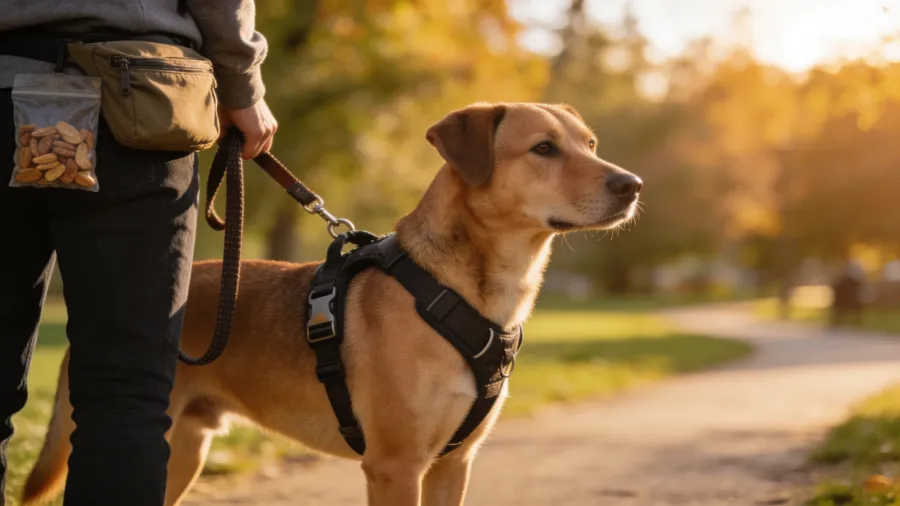
At a Glance
Everyday Leash Length
4–6 feet for most walking and training.
Collar vs. Harness
Harness recommended for pullers, small breeds, and brachycephalic dogs.
Reward Delivery
A treat pouch keeps rewards ready without fumbling.
Did You Know?
Retractable leashes offer little control in an emergency and are discouraged by most professional trainers for this reason.
The right equipment doesn’t train a dog by itself, but the wrong gear can work directly against your efforts — a poor-fitting collar or the wrong leash length undermines even good technique.
Collar, Harness, or Both
A front-clip harness discourages pulling by redirecting a dog’s momentum sideways, while a flat collar is fine for a dog that already walks politely. Choke or prong collars carry real risk of injury and are best left to a professional trainer’s guidance, if used at all.
Clickers and Marker Words
A clicker offers a precise, consistent marker for the exact moment a dog does the right thing — some owners use a marker word like "yes" instead, with similar effect if used consistently.
Treat Pouches and Reward Timing
Having rewards immediately accessible — rather than fumbling in a pocket — keeps the gap between behavior and reward short, which matters more to learning speed than the treat itself.
Related Reading
Dog Gifts


Copyright © 2005–2026 Dog Pound. All rights reserved.