
Selecting a Dog
Good Dogs for Children
The right dog can become a childhood’s best companion — patient, sturdy, and forgiving of small mistakes. The wrong match, though well-meaning, can end in frustration on both sides.
Temperament Over Breed Reputation
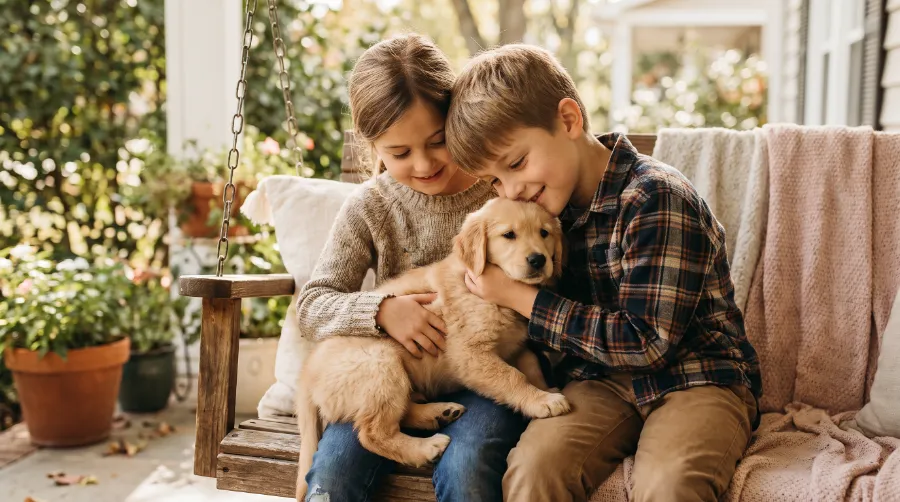
A breed known for gentleness is only a starting point — individual temperament varies widely within any breed. Meet the specific dog, watch how it responds to noise and handling, and favor a calm, food-motivated disposition over one bred purely for looks.
Size and Sturdiness Matter
A toy breed can be injured by well-meaning rough play, while a robust, medium-to-large dog often tolerates a child’s enthusiasm better. Breeds historically kept as family companions — Labradors, Beagles, Golden Retrievers — tend to combine patience with resilience.
Supervision Is Never Optional
Even the most even-tempered dog needs a buffer of adult supervision with young children, since neither party reliably reads the other’s warning signs. Teaching children to recognize a dog’s body language is as important as choosing the breed itself.
Did You Know?
Dogs communicate discomfort through subtle signals — a yawn, a lip lick, turning away — long before a growl. Children rarely notice these cues without being taught to look for them.
Related Reading
Dog Gifts
Copyright © 2005–2026 Dog Pound. All rights reserved.